Introduction: A Decade-Long Puzzle Resolved
For years, the muon—a fleeting, heavier cousin of the electron—seemed to harbor a secret: a tiny, persistent discrepancy between its magnetic moment and the predictions of the Standard Model of particle physics. This anomaly, known as the muon g-2, tantalized physicists with the possibility of a fifth fundamental force or an unknown particle. But a groundbreaking new analysis using supercomputers has now shown that the apparent rule-breaking was likely due to a miscalculation in theoretical predictions. The Standard Model, it appears, still stands unchallenged.
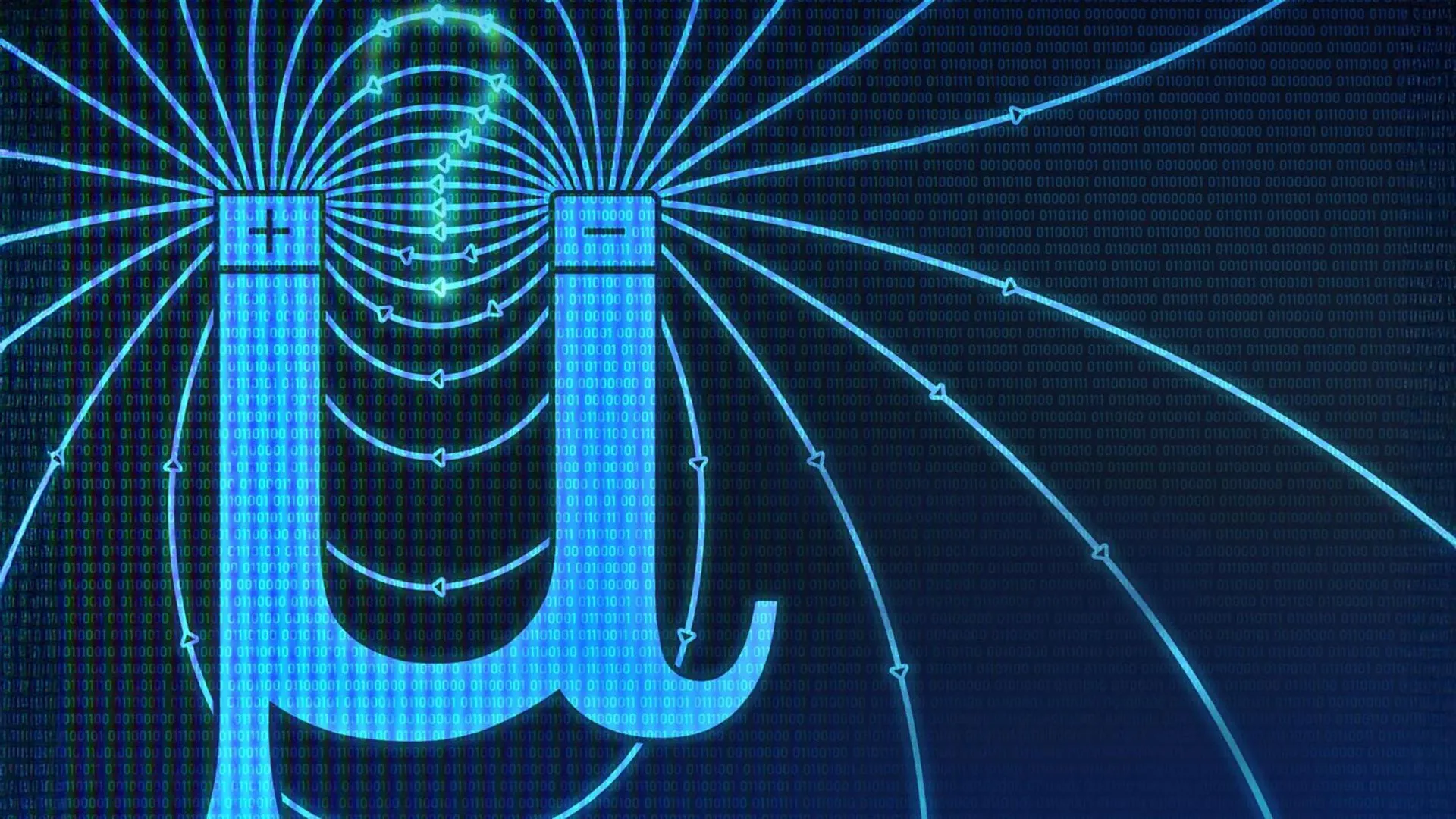
The Muon: A Strange and Elusive Particle
Muons are fundamental particles produced in cosmic rays and particle accelerators. They are unstable, decaying after a mere 2.2 microseconds, yet they play a crucial role in testing our understanding of the quantum world. Their magnetic moment, a measure of how they interact with a magnetic field, can be calculated with extraordinary precision using quantum field theory. Any deviation from the predicted value would signal new physics beyond the Standard Model.
Experiments at Brookhaven National Laboratory (1997–2001) first reported a tantalizing 3.7-sigma discrepancy in the muon's magnetic moment. This heightened interest, leading to the more precise Muon g-2 experiment at Fermilab, which confirmed the anomaly at the 4.2-sigma level in 2021—strong evidence that something was amiss.
The g-2 Anomaly and the Search for a Fifth Force
The g-2 anomaly refers to the small difference between the experimental value of the muon's magnetic moment (g) and the value predicted by the Standard Model. If real, it could imply the existence of new particles that interact with muons, altering their magnetic moment. Speculation ranged from leptoquarks to dark matter, or even a completely unknown force. The hunt for such a 'fifth force' became a holy grail for particle physics.
However, the theoretical side of the calculation was fraught with difficulty. The dominant contribution comes from quantum electrodynamics (QED), but hadronic (strong force) effects, particularly from virtual particles like quarks and gluons, add significant uncertainty. To match the experimental precision, theorists needed to compute these hadronic contributions with unprecedented accuracy.
Theoretical Calculations: The Smoking Gun
The most challenging part of the theoretical prediction is the hadronic vacuum polarization (HVP) term, which arises from quark-antiquark pairs temporarily popping into and out of the vacuum around the muon. For decades, the HVP was estimated using data from electron-positron collisions, but a new method—lattice QCD—offered a direct first-principles calculation.
Lattice QCD simulates the strong force on a discrete space-time grid using supercomputers. In 2023, the BMW Collaboration published a lattice QCD calculation that produced an HVP value significantly different from the data-driven approach. Their result brought the theoretical prediction closer to the experimental value, reducing the anomaly to less than 1.5 sigma—effectively zero.
Further work by multiple groups, including the RBC and UKQCD collaborations, confirmed this shift. The earlier discrepancy was traced to subtle errors in the data-driven method, such as underestimated uncertainties in certain cross-section measurements and missing contributions from higher-order hadronic effects. After correcting these, the Standard Model's prediction now agrees with experiment within error bars.
A Breakthrough: Supercomputer Calculations Reveal the Truth
Behind this resolution lies years of painstaking supercomputer efforts. Lattice QCD calculations require petaflop-scale computing to handle billions of variables representing quark and gluon fields. The BMW collaboration used the JUQUEEN supercomputer in Germany and the Blue Waters machine in the US to run simulations with a virtual box of space-time, gradually approaching the continuum limit.
These calculations not only determined the HVP value but also uncovered a systematic bias in older electron-positron data—the so-called radiative corrections had been imperfectly accounted for. Once fixed, the data-driven method aligned with lattice QCD. The g-2 anomaly, which had inspired countless theoretical models, was largely an artifact of miscalculation.
Implications for the Standard Model and Future Research
The resolution of the muon g-2 anomaly does not mean the end of the search for new physics. The Standard Model, while robust, is known to be incomplete—it does not explain dark matter, neutrino masses, or the matter-antimatter imbalance. However, the muon's magnetic moment no longer points to a clear crack in the theory.
Future experiments, such as the Muon g-2 experiment now analyzing its full dataset (expected by 2025–2026), will reduce experimental uncertainty even further. Meanwhile, theorists are already exploring other observables, such as the electric dipole moment of the muon or rare kaon decays, for hints of new physics. The episode underscores the importance of precision calculations and the interplay between experiment and theory.
As physicist Zoltan Fodor of the BMW collaboration remarked, 'The Standard Model is not dead—it's just been given a new lease on life.' The muon, once seen as a rule-breaking rebel, now falls in line with our best understanding of the quantum world.
Conclusion: Patience and Precision Win the Day
The decade-long saga of the muon g-2 anomaly teaches a valuable lesson in the scientific method. An apparent contradiction inspired intense work, leading to better measurements and more sophisticated theory. In the end, the 'mysterious new force' turned out to be a mirage—but the journey yielded a more accurate Standard Model and sharper tools for future discovery. The muon remains a fascinating particle, and now we know its dance with the magnetic field is exactly as predicted.
Key milestones:
- 1997–2001: Brookhaven Muon g-2 experiment shows 3.7 sigma discrepancy.
- 2021: Fermilab confirms anomaly at 4.2 sigma.
- 2023: BMW collaboration's lattice QCD calculation reduces anomaly to ~1.5 sigma.
- 2024: Further lattice and data-driven calculations converge, eliminating the anomaly.