I77537 StackDocsProgramming
Related
From Mill to Data Center: A Step-by-Step Guide to Repurposing Rural Industrial SitesAt 40, History Teacher Switches to Rust Programming — Career Change Documented in New SeriesAutomating Intellectual Toil: Agent-Driven Development at Copilot Applied ScienceFlutter's GenUI Update: Architectural Shift and Enhanced LLM ControlHow to Choose the Best AI Coding Assistant: A Month-Long Trial GuideMastering Qt Designer with Python for Rapid GUI DevelopmentIntel Graphics Compiler IGC 2.34.4 Delivers Enhanced Performance for Compute and Shader WorkloadsGo 1.26 Type Checker Overhaul Eliminates Corner Cases in Type Construction

10 Things You Need to Know About Turbovec: The Rust Vector Index Powered by Google’s TurboQuant

Last updated: 2026-05-21 05:32:34 · Programming
10 Things You Need to Know About Turbovec: The Rust Vector Index Powered by Google’s TurboQuant
Source: www.marktechpost.com

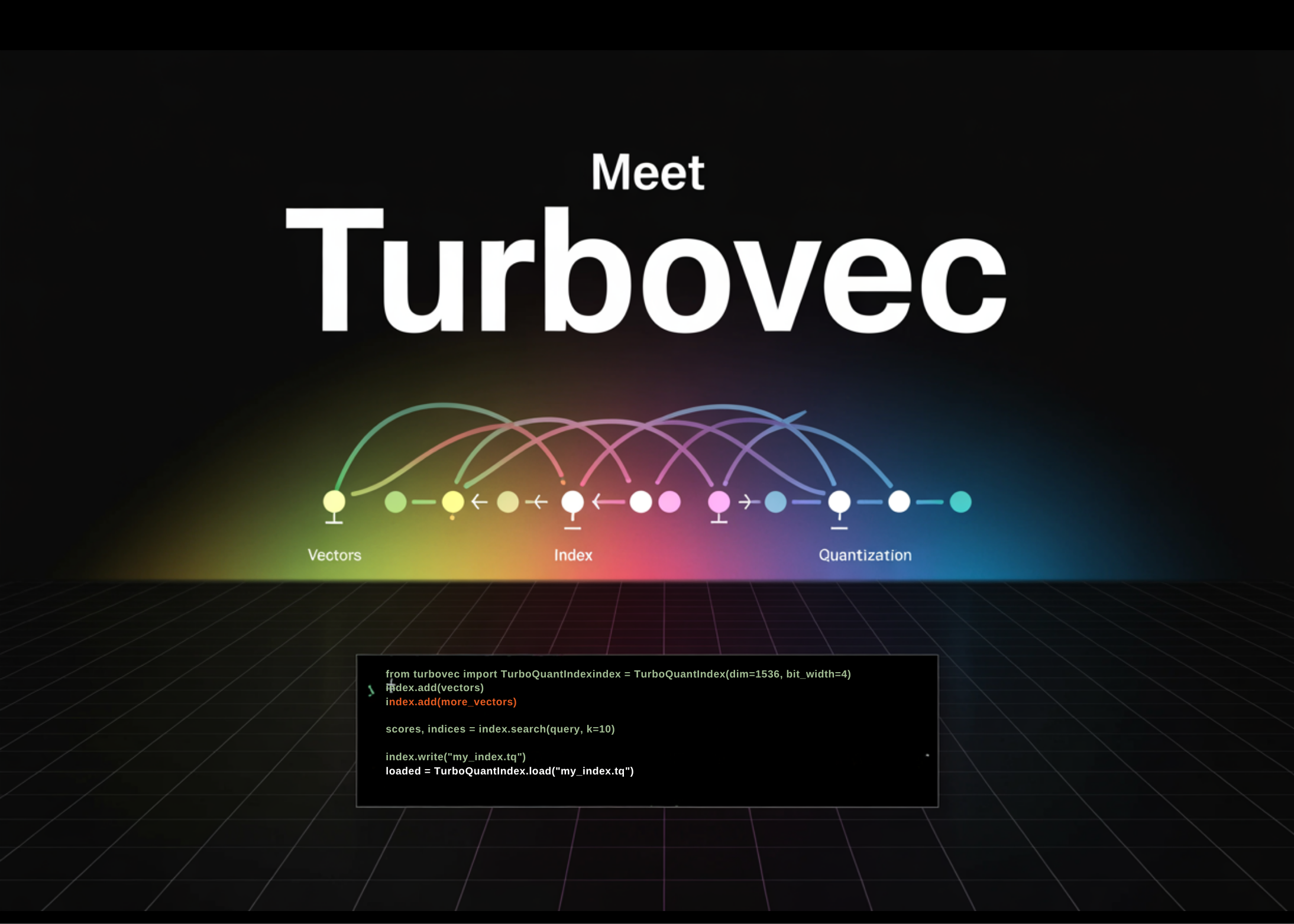
Retrieval-augmented generation (RAG) pipelines have become the backbone of modern AI applications, but scaling them comes at a cost. Storing 10 million float32 embeddings consumes 31 GB of RAM—a serious constraint for teams running local or on-premise inference. Enter Turbovec, an open-source vector index written in Rust with Python bindings that leverages Google Research’s TurboQuant algorithm. It slashes memory usage by 8x (to just 4 GB for the same corpus) and delivers search speeds that outpace FAISS IndexPQFastScan by 12–20% on ARM hardware. Below, we break down the ten essential details you need to know about this library, from its unique quantization approach to real-world performance numbers.

10 Things You Need to Know About Turbovec: The Rust Vector Index Powered by Google’s TurboQuant
Source: www.marktechpost.com