In many electronic circuits, transistors work together in pairs or groups to perform critical functions. For these circuits to operate reliably and efficiently, the transistors often need to have closely matched characteristics. This process is known as transistor matching. While integrated circuits (ICs) can include matched pairs built on the same silicon die, discrete transistors from the same batch may still vary. This article explores why matching matters, which parameters to focus on, and how it differs from other concepts like impedance matching.
What Does It Mean to Match Transistors and Why Is It Important?
Matching transistors means selecting two or more discrete transistors that have nearly identical electrical characteristics, such as current gain (beta) or saturation voltage. This is crucial in circuits where transistors share the load, like in differential amplifiers, current mirrors, or push-pull stages. When transistors are mismatched, one device may carry more current than the other, leading to uneven stress, reduced efficiency, and potential overheating. Over time, the overloaded transistor can fail prematurely. By matching, you ensure each transistor operates within its safe limits and the circuit performs as intended.
How Are Transistors in Integrated Circuits Naturally Matched?
In an integrated circuit, matched transistor pairs are often fabricated on the same tiny piece of silicon, right next to each other. Because they go through identical manufacturing steps and are exposed to the same environmental conditions, their electrical properties are inherently very close. This is a major advantage of ICs over discrete designs. However, even within an IC, some variation exists, so designers use techniques like common-centroid layouts to further improve matching. For high-precision applications, ICs specifically designed as matched pairs are available, eliminating the need for external matching.
What Challenges Arise When Matching Discrete Transistors?
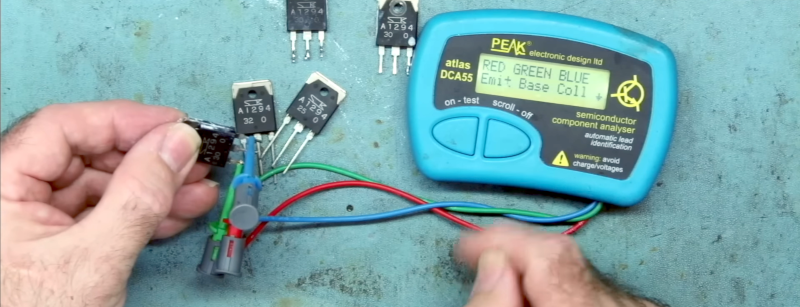
Discrete transistors of the same part number can still vary significantly due to manufacturing tolerances. For example, two 2N3904 transistors from different batches might have current gains that differ by 20% or more. This variation means that simply buying a handful of the same type does not guarantee they will be well matched. To overcome this, hobbyists and engineers measure each transistor’s key parameters—like gain at a specific collector current—and then pair up those with the closest values. Temperature differences and aging can further degrade matching over time, so matched pairs may need to be thermally coupled in the final circuit.
Which Parameters Are Typically Matched in Transistors?
The most commonly matched parameter is DC current gain (hFE or β), because it determines how much collector current flows for a given base current. In differential amplifiers, gain matching ensures balanced output. Another important parameter is saturation voltage (VCE(sat)), especially in switching circuits where transistors are fully on. Matching saturation voltages prevents one transistor from heating more than the other. For bipolar junction transistors (BJTs), the base-emitter voltage (VBE) at a given collector current is also often matched, as it affects the input offset voltage in op-amps and comparators.
How Does Transistor Matching Prevent Circuit Inefficiency and Failure?
When transistors are mismatched, the device with higher gain or lower saturation voltage will conduct more current. This imbalance forces the “better” transistor to dissipate more power, causing it to run hotter. As temperature increases, its characteristics shift further, potentially creating thermal runaway. The weaker transistor, doing less work, may not contribute as intended, reducing overall circuit efficiency. In power amplifiers, this can lead to distortion; in switching regulators, it can cause ripple or instability. By matching, you distribute the load evenly, allowing each transistor to operate within its safe operating area, thereby increasing reliability and lifespan.
Can You Give an Analogy of Matching Components in Other Circuits?
Absolutely. Consider a bridge circuit using two 10kΩ resistors with 10% tolerance. One resistor might be 9kΩ and the other 11kΩ, which would create an offset in the bridge output. However, if you match the resistors—selecting two that are both, say, 10.8kΩ—the bridge remains balanced. The absolute value matters less than the relative match. The same principle applies to capacitors in RC filters or timing circuits. Just as with transistors, the goal is to ensure that both components behave identically under the same conditions, so the circuit functions correctly without compensation.
How Is Transistor Matching Different from Impedance Matching?
Impedance matching is about optimizing power transfer between a source and a load by making their impedance values equal (or conjugate for reactive components). For example, an audio amplifier’s output impedance should match the speaker impedance to maximize power delivery. Transistor matching, by contrast, focuses on making two or more active devices have similar electrical characteristics so they, share the work evenly. Impedance matching involves passive components and the relationship between input and output; transistor matching deals with the internal parameters of the transistors themselves. They are separate concepts, though both are essential for high-performance circuit design.