A love for coffee drives the work of University of Oregon chemist Christopher Hendon, whose fascination with the perfect cup has led him to explore new frontiers in flavor science. His latest endeavor, published in Nature Communications, introduces a surprising tool: electrical current. By sending a small electric charge through a sample of brewed coffee, Hendon's team can measure its flavor profile with remarkable precision. This innovation builds on years of research into the chemistry and physics behind coffee extraction.
The Challenge of Consistency in Coffee Brewing
For baristas and coffee enthusiasts, replicating an exceptional cup of espresso consistently is a daunting task. The rich flavor arises from roughly 2,000 distinct compounds extracted from coffee grounds during brewing. Variations in water temperature, pressure, grind size, and brew time can shift the balance of these compounds, leading to inconsistent results.
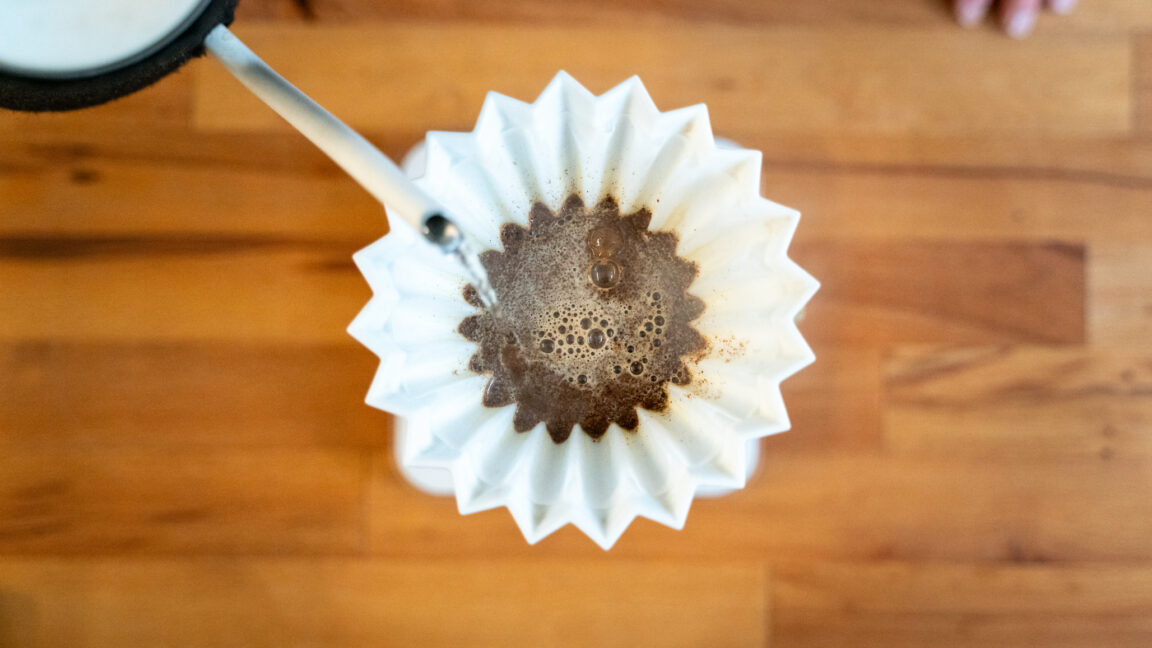
To address this, Hendon's lab previously developed a mathematical model that simplifies the complexity by focusing on a key parameter: extraction yield (EY), the fraction of coffee solids that dissolve into the water. This model helps predict how changes in water flow and pressure affect the final brew. Interestingly, the model was inspired by the behavior of lithium ions moving through a battery's electrodes—a process analogous to caffeine molecules dissolving from the coffee grounds.
While the extraction yield model improves consistency, it doesn't directly measure flavor. That's where the new electrical technique comes in.
A New Approach: Electrical Current as a Flavor Probe
Hendon's team discovered that the electrical conductivity of coffee—measured by passing a small current through a sample—correlates strongly with its chemical composition. Different flavor compounds, such as acids, sugars, and bitter alkaloids, affect conductivity in distinct ways. By analyzing the current's response, researchers can infer the concentration of key flavor molecules without complex chemical analysis.
In their experiments, they brewed coffee under controlled conditions and measured both the electrical current and the traditional flavor attributes (e.g., acidity, bitterness, body). Statistical analysis revealed a clear relationship: the current profile acts as a fingerprint for the coffee's flavor. This method is fast, non-destructive, and requires only a small volume of liquid—making it potentially useful for real-time quality control in cafés and roasteries.
The Science Behind the Brew: From Batteries to Coffee
The connection between lithium-ion batteries and coffee might seem unlikely, but it's rooted in the physics of ion movement. In batteries, lithium ions travel through a medium (electrolyte) under an electric field, a process described by the Nernst-Planck equation. Hendon realized that similar equations govern the extraction of ions—including flavor-active chemicals—from coffee grounds into water. The new electrical method essentially treats the brewed coffee as an electrolyte, where the dissolved compounds carry charge.

By measuring the current-voltage relationship, the team can quantify the total dissolved solids and even estimate the presence of specific ions. This bridges the gap between the physical process of extraction and sensory perception.
Practical Implications for Baristas and Coffee Lovers
Looking ahead, this technique could empower baristas to adjust brewing parameters on the fly. Imagine a smart espresso machine that uses a small sensor to measure the coffee's electrical signature mid-pull, then automatically tweaks temperature or flow to achieve a target flavor profile. For home brewers, a simple device could provide instant feedback on their extraction quality.
Moreover, the electrical method could help roasters evaluate how different roast levels or bean origins influence flavor, leading to more consistent products. While still in the research phase, Hendon's work points toward a future where electricity becomes as essential to coffee as water and beans.
Conclusion
Christopher Hendon's research transforms our understanding of coffee chemistry, leveraging the elegance of electrical measurements to unlock flavor secrets. From lithium-ion batteries to espresso extraction, the underlying principles of ion movement provide a unifying framework. As this method develops, it promises to demystify the art of brewing, making perfect cups more attainable for everyone.
Reference: Nature Communications, 2025 (original paper). For more on Hendon's earlier work on extraction yield models, see the section above.